


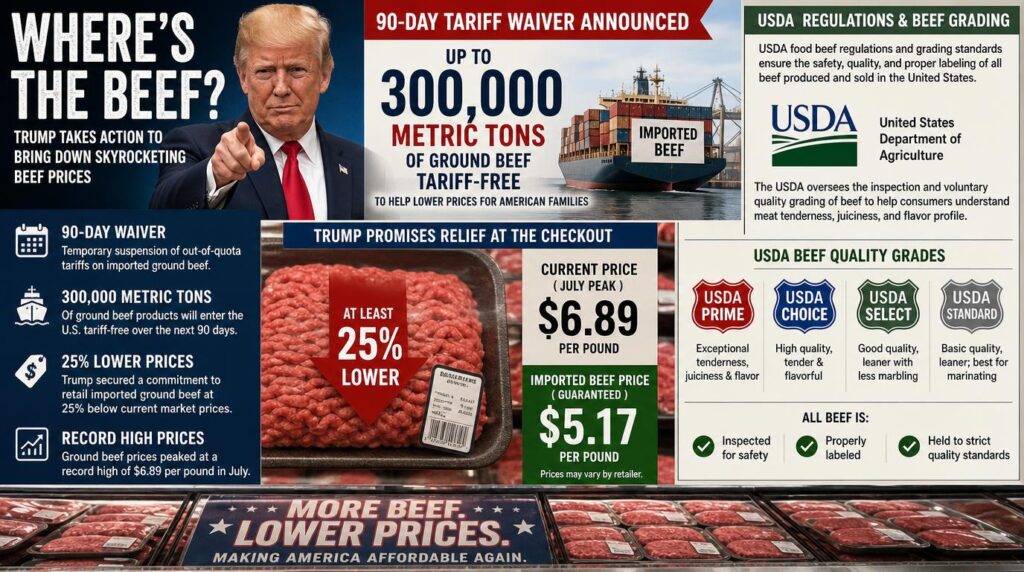
President Donald J. Trump announced a controversial plan to temporarily waive out-of-quota tariffs on up to 300,000 metric tons of imported ground beef over the next 90 days to fight grocery inflation. This move aims to alleviate rising prices at the grocery store by increasing the supply of ground beef in the domestic market, thereby putting downward pressure on costs for consumers.
The decision has sparked debate among policymakers, industry stakeholders, and consumer advocates. Supporters argue that the tariff waiver is a necessary step to address inflationary pressures that have made basic food items less affordable for American families. By allowing more imported ground beef without the usual tariff restrictions, the government hopes to increase market competition and reduce prices.
Critics, however, warn that this approach could adversely affect domestic cattle producers who rely on tariff protections to compete against foreign imports. They express concerns that a surge in cheaper imported beef could undermine local farmers and ranchers, potentially leading to long-term harm to the U.S. agricultural sector.
The 90-day waiver period is designed as a temporary measure to provide immediate relief while longer-term strategies to combat inflation and stabilize food prices are developed. The administration has pledged to monitor the market closely and adjust policies as necessary to balance consumer interests with those of domestic producers.
This initiative highlights the broader challenge facing the government as it seeks to manage inflation without disrupting key industries. As grocery prices continue to impact household budgets, the effectiveness and consequences of this tariff waiver will be closely watched by all stakeholders involved.


